What Is an Automatic Start-Stop System?
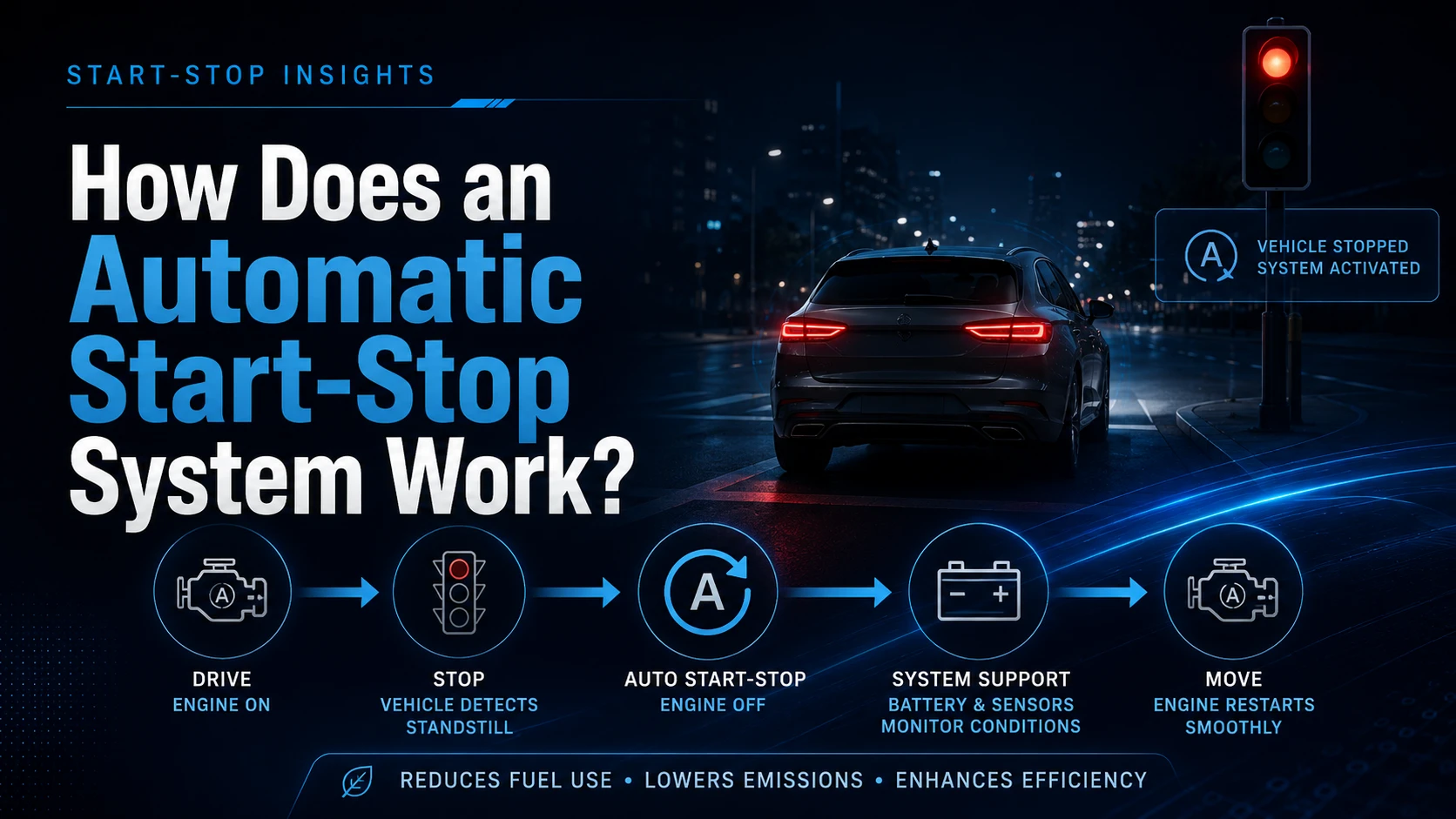
An automatic start-stop system temporarily turns off the engine when the vehicle is stationary and restarts it when the driver is ready to move.
The system is commonly used during:
- Traffic-light stops;
- Heavy urban traffic;
- Short periods of idling;
- Stop-and-go driving.
Its main purpose is to reduce unnecessary engine idling when operating conditions are suitable.
The exact name varies by manufacturer. Common names include:
- Auto Start-Stop;
- Stop/Start;
- Engine Stop/Start;
- ESS;
- ISG;
- Idle Stop.
Although the names differ, the basic principle is similar.
What Happens When the Vehicle Stops?
The vehicle’s control system monitors multiple inputs before deciding whether to shut down the engine.
These inputs may include:
- Vehicle speed;
- Brake-pedal position;
- Accelerator-pedal position;
- Gear position;
- Battery charge level;
- Engine temperature;
- Cabin temperature;
- Air-conditioning demand;
- Steering-wheel position;
- Seat-belt status;
- Door and hood status.
When the vehicle comes to a complete stop and all required conditions are satisfied, the engine control system may stop fuel delivery and engine operation.
Electrical systems such as lighting, audio, and vehicle control modules normally continue to receive power from the battery.
How Does the Engine Restart?
The restart command depends on the vehicle design.
The engine may restart when the driver:
- Releases the brake pedal;
- Presses the accelerator;
- Depresses the clutch pedal;
- Moves the gear selector;
- Turns the steering wheel;
- Increases air-conditioning demand.
Some systems may also restart the engine automatically when battery charge drops or cabin climate requirements change.
Why the Engine Does Not Stop Every Time
The start-stop system is conditional, not absolute.
The engine may continue running when:
- The battery charge is insufficient;
- The battery is being recharged;
- The engine is too cold;
- The engine temperature is too high;
- Cabin heating or cooling demand is high;
- The vehicle is on a steep incline;
- The steering wheel is turned significantly;
- A door or hood is open;
- The driver’s seat belt is not fastened;
- A trailer or special driving mode is active.
These conditions are normal protective strategies.
What Does the Start-Stop OFF Button Do?
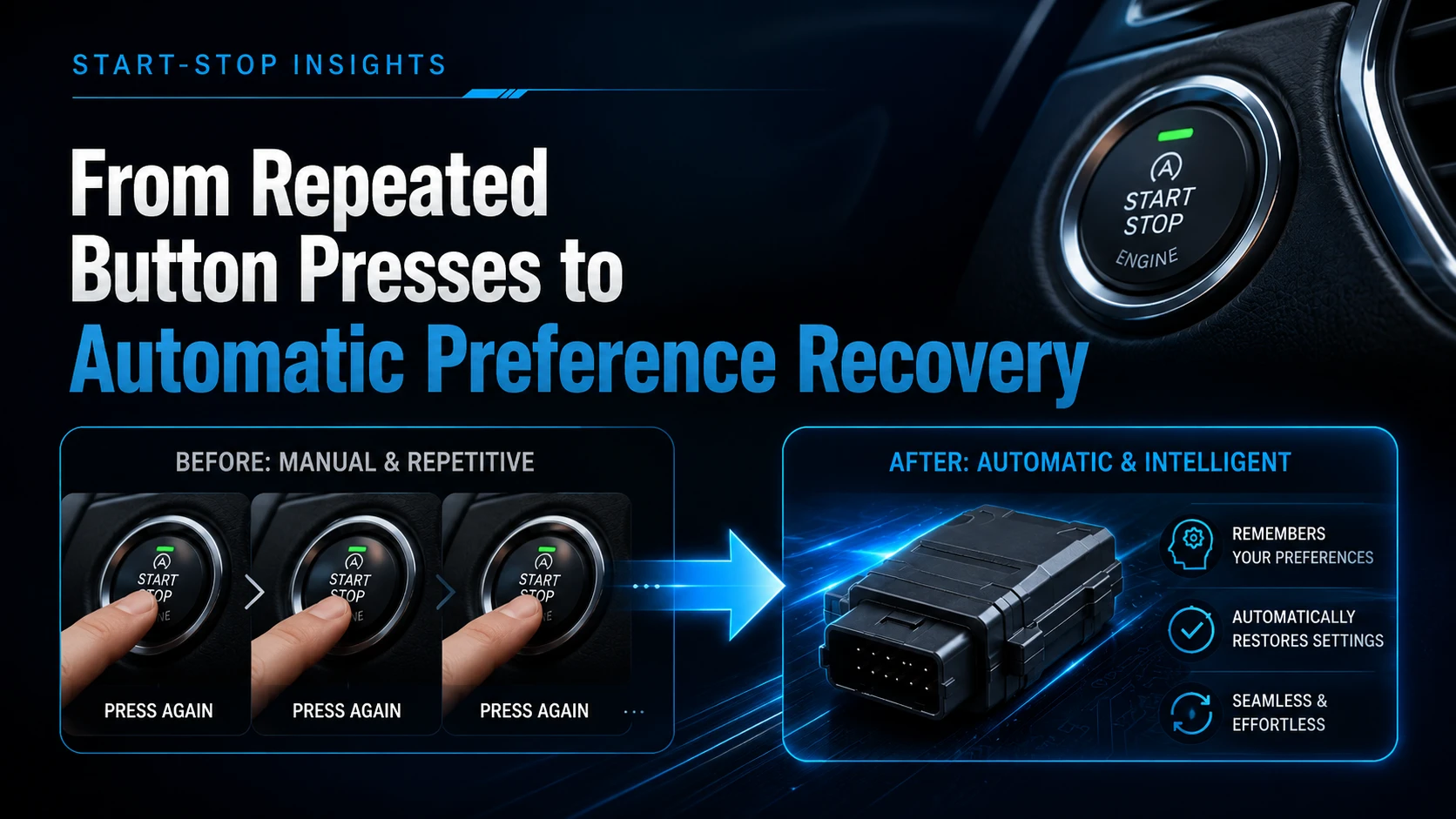
Most vehicles with a physical start-stop OFF button allow the driver to deactivate the system temporarily.
However, the system usually returns to its default setting after the vehicle is turned off and restarted.
A compatible memory module can reduce this repeated operation by restoring the driver’s preferred setting after startup.
Call to Action:
Visit [Product Link] to check whether a start-stop preference module is available for your vehicle.