“Unavailable” Does Not Always Mean “Broken”
Drivers sometimes assume the system has failed when the engine does not shut down at a traffic light.
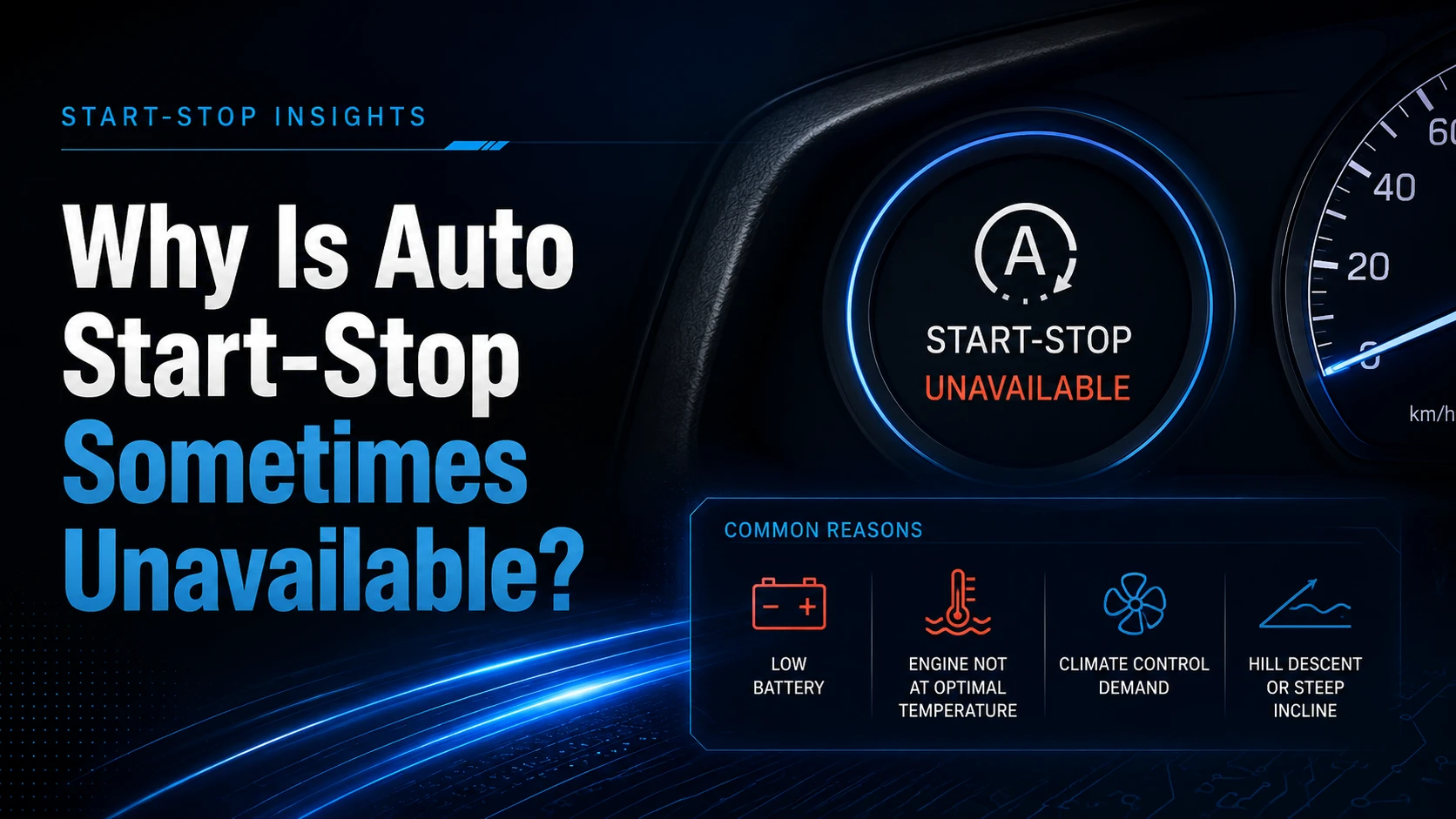
In many cases, the vehicle is deliberately keeping the engine running because one or more operating conditions have not been satisfied.
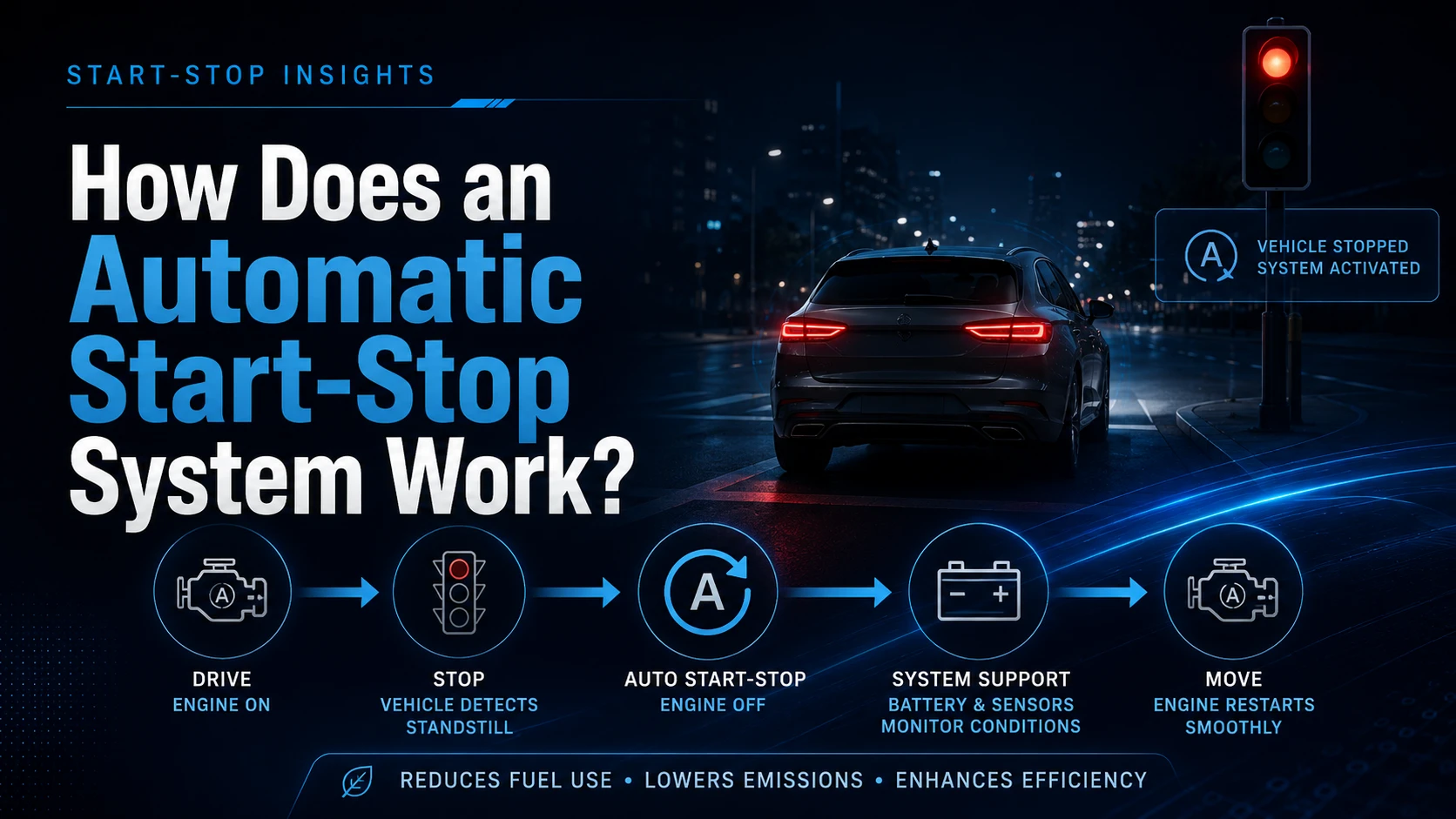
Automatic start-stop systems are designed to protect battery performance, engine operation, cabin comfort, and vehicle safety.
Battery Charge Is Too Low
The battery is one of the most important factors in start-stop operation.
The system may remain unavailable when:
- Battery voltage is low;
- Battery charge is below the required level;
- The battery is aging;
- The vehicle has recently been jump-started;
- The vehicle has been parked for a long period;
- The vehicle is making repeated short trips;
- Electrical demand is unusually high.
A weak battery may still start the engine but may not have sufficient reserve capacity for repeated automatic restarts.
The Engine Has Not Reached the Required Temperature
After a cold start, the engine may need additional time to reach its normal operating temperature.
The system may also remain inactive during extremely hot conditions to support cooling.
This is especially common during:
- Winter driving;
- Very short journeys;
- Extended idling after startup;
- Extreme summer heat.
Heating or Air-Conditioning Demand Is High
The engine may remain running when the climate-control system requires more power.
Examples include:
- Maximum air-conditioning;
- Windshield defrosting;
- High heater demand;
- Large difference between cabin and selected temperature;
- High humidity requiring continuous ventilation.
The system prioritizes driver visibility and cabin comfort over temporary engine shutdown.
The Steering Wheel Is Turned
Some vehicles prevent automatic engine shutdown when the steering wheel is turned beyond a certain angle.
This may occur when:
- Parking;
- Turning at an intersection;
- Maneuvering in a narrow area;
- Waiting to enter traffic.
The vehicle assumes that immediate movement may be required.
A Door, Hood, or Seat Belt Condition Is Not Satisfied
The system may not activate when:
- The hood is open;
- The driver’s door is open;
- The driver’s seat belt is unfastened;
- The vehicle does not detect the driver correctly;
- A related sensor is malfunctioning.
These conditions vary by vehicle.
Special Driving Modes May Disable the System
Automatic start-stop may be limited or disabled in:
- Sport mode;
- Tow mode;
- Off-road mode;
- Snow mode;
- Manual shift mode;
- Certain four-wheel-drive settings.
The system may also behave differently when towing a trailer.
When Should the Vehicle Be Inspected?
Professional inspection may be necessary when:
- The system remains unavailable for an extended period;
- A battery or charging warning appears;
- The factory start-stop button does not respond;
- Multiple electrical systems behave abnormally;
- Diagnostic fault messages appear;
- The issue started immediately after a repair.
Before diagnosing an aftermarket memory module, test the vehicle in its original factory configuration.