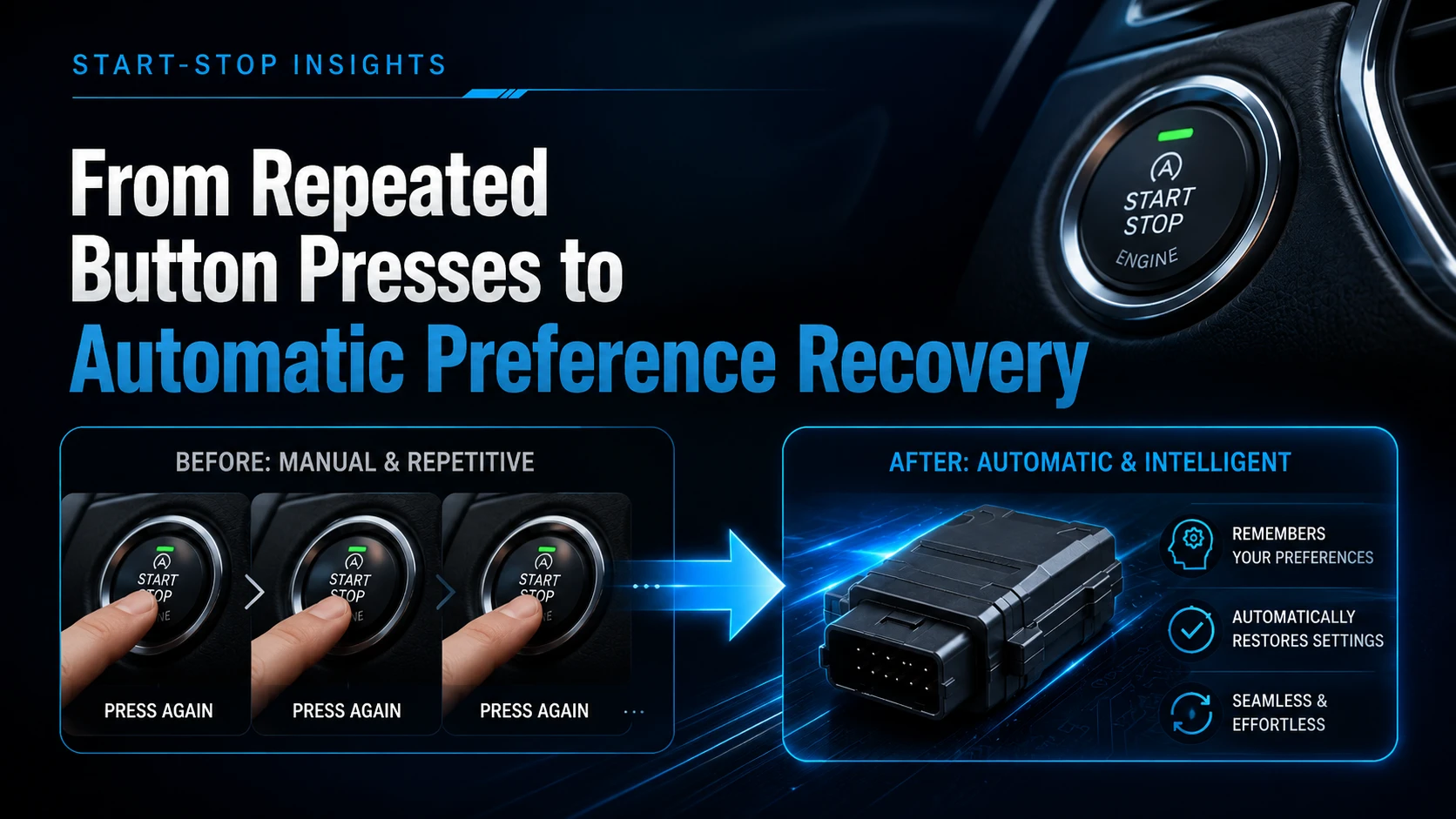
Myth 1: Every Start-Stop Eliminator Permanently Removes the System
This is not always true.
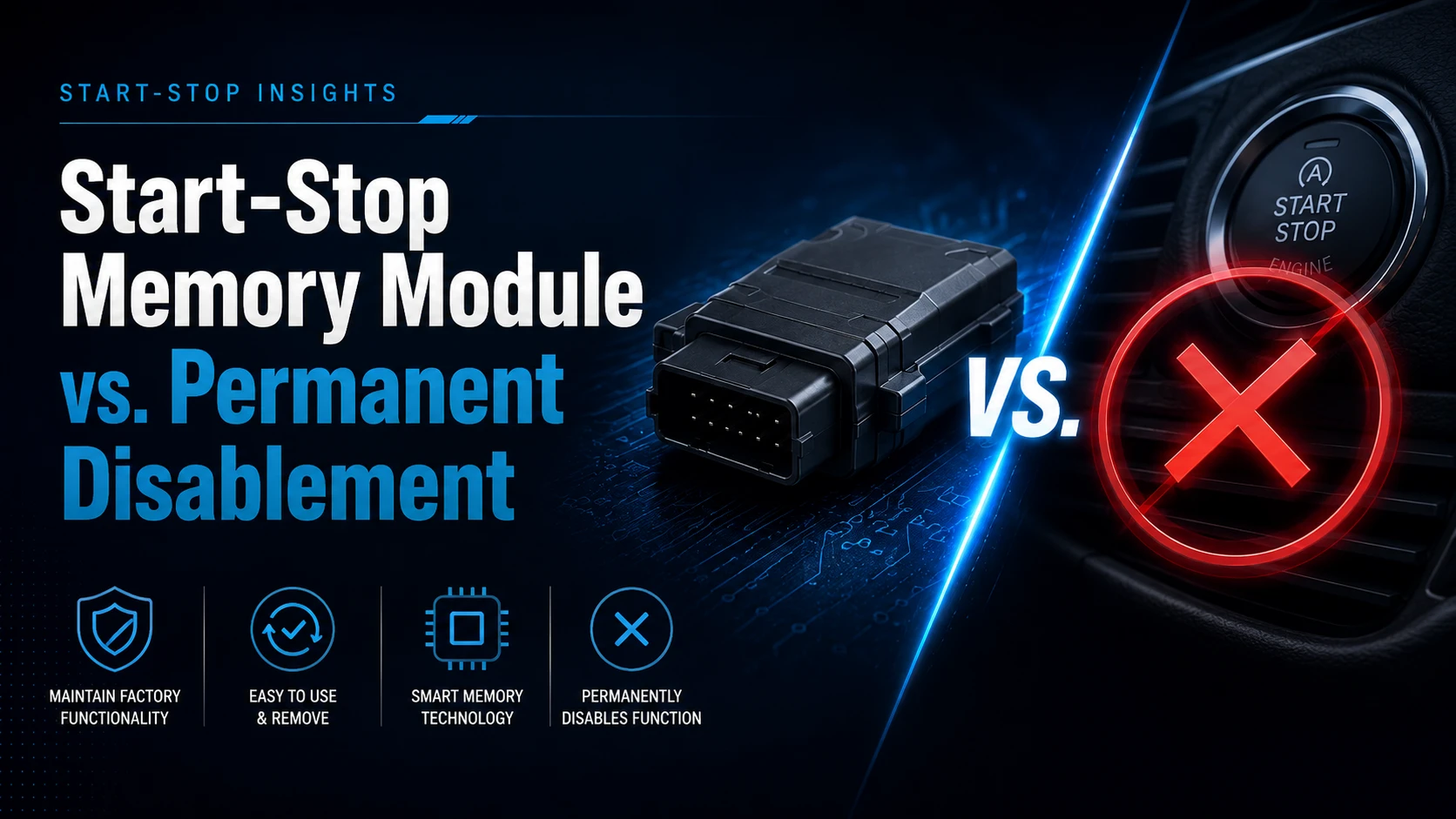
Many products simply:
- Remember the previous setting;
- Restore the OFF mode;
- Send an automatic button command after startup.
The factory system may still remain available.
Customers should read the product description carefully and verify whether the original button continues to work.
Myth 2: One Module Works With Every Vehicle
Automatic start-stop systems are not standardized across all manufacturers.
Different vehicles use different:
- Connectors;
- Control switches;
- Communication protocols;
- Electronic modules;
- Software logic.
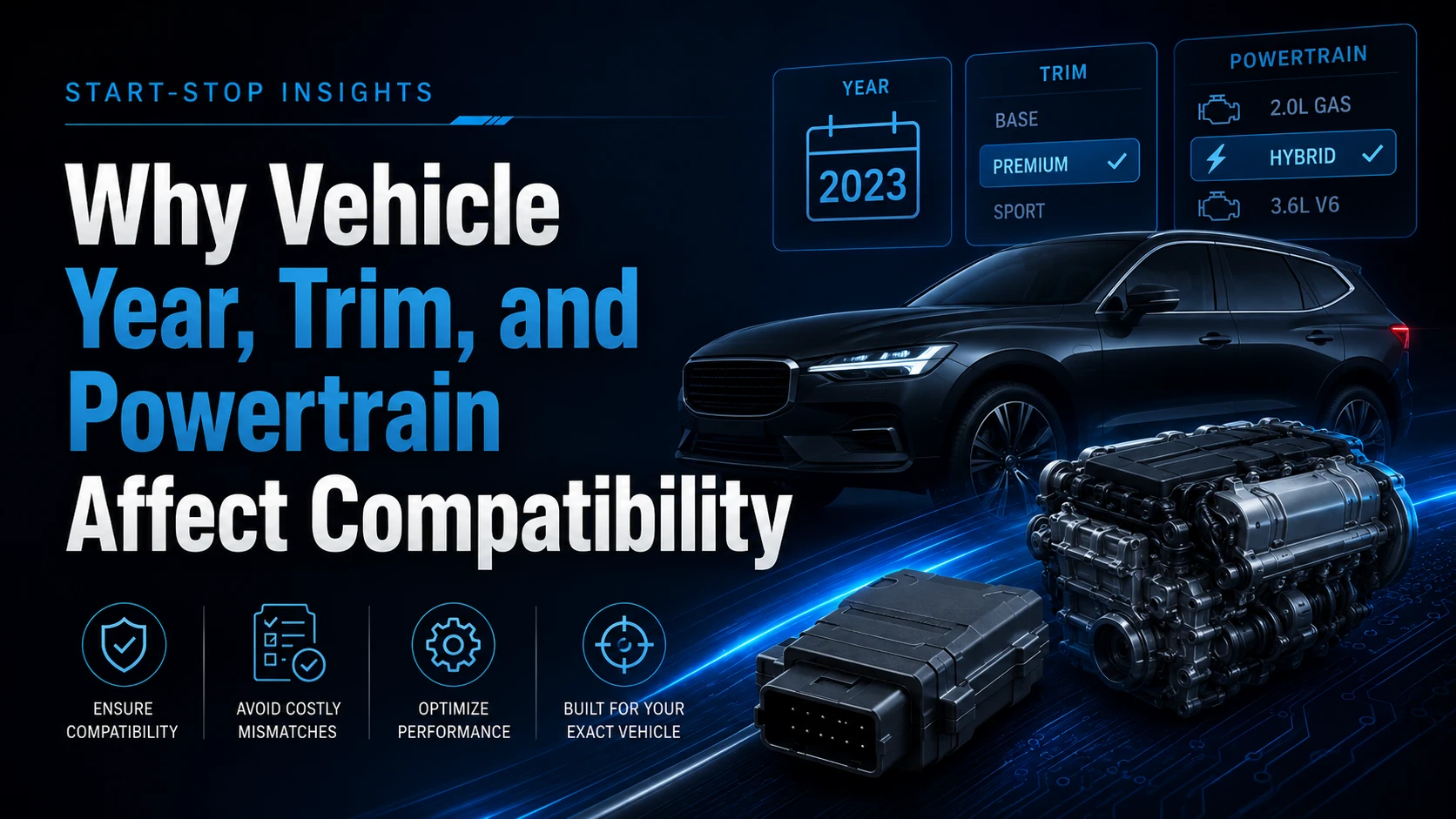
A product should be matched to the exact vehicle make, model, year, trim, and powertrain.
Myth 3: If the Engine Does Not Stop, the Module Is Faulty
The engine may remain running because:
- Battery charge is low;
- Climate-control demand is high;
- The engine is cold;
- The hood or door is open;
- The steering wheel is turned;
- A special driving mode is active.
The module should be tested by checking the selected start-stop setting, not by expecting the engine to shut down at every stop.
Myth 4: Plug-and-Play Means No Installation Knowledge Is Needed
Plug-and-play means the product normally uses existing connectors without wire cutting.
It does not mean installation is impossible to perform incorrectly.
Incorrect installation may still involve:
- Wrong connector selection;
- Loose locking tabs;
- Pinched wiring;
- Damaged trim;
- Incorrect product fitment.
The installation instructions remain necessary.
Myth 5: A Memory Module Repairs Battery or Start-Stop Faults
A memory module does not repair the factory system.
It cannot correct:
- Weak batteries;
- Charging-system faults;
- Damaged sensors;
- Broken factory switches;
- Software errors;
- Wiring faults.
The vehicle’s original start-stop system should be operating correctly before an accessory module is installed.
Myth 6: The Product Can Never Affect Warranty or Service
No responsible seller should make an absolute warranty statement for every country, dealer, vehicle, and repair situation.
Warranty decisions depend on:
- Local law;
- Vehicle manufacturer policy;
- Type of repair;
- Cause of the failure;
- Installation quality;
- Whether the accessory contributed to the problem.
A reversible plug-and-play product may simplify service and diagnosis, but customers should not rely on unsupported claims such as “guaranteed not to affect any warranty.”
What Customers Should Look for Instead
A reliable product page should focus on verifiable information:
- Exact compatibility;
- Product function;
- Installation method;
- Reversibility;
- Factory button operation;
- Technical support;
- Clear limitations;
- Troubleshooting procedures.
Accurate technical information is more valuable than exaggerated marketing language.
Call to Action:
Explore [Knowledge Center Link] for additional information about vehicle compatibility, installation, and start-stop system operation.